Numerous churches in the Ruhr area reflect industrial history in the cultural, social and also national regard. Only some individual sacred items commemorate the “Ruhr Poles”.
The photos shown are part of a larger series by Brigitte Kraemer (*1954) from the project titled “Endlich so wie überall?” (“Finally just like everywhere?”) from 1985.
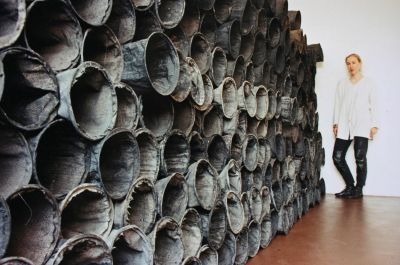
Brygida Wróbel-Kulik, born in 1952 in Chorzów, is a visual artist, painter, graphic artist, cartographer and creator of spatial installations, living in Düsseldorf.
Under the National Socialist regime, there were forced labourers in nearly all German villages, towns and communities. Hirzenhain was no exception. On 26 March 1945, the SS shot 87 forced labourers here in a mass execution.
The exhibition was created in conjunction with the thesis by Maria Steffen in 1996 at the Ruhrakademie Schwerte, supervised by Professor Gerd Aretz (photography) and Jörg Meyer (typography).
The photographs (1924–1965) shown here were gathered courtesy of Jean Chęciński and bear witness to the everyday life of the Polish diaspora in the Alsatian Bassin Potassique.
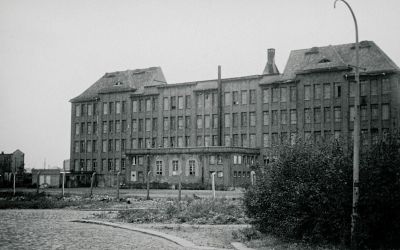
1,400 men from the city were taken to a satellite concentration camp that had been set up near the ‘Adlerwerke’ factories in Frankfurt/Main, where they were put to work as forced labourers.
Sabina Kaluza’s works are deeply influenced by German-Polish history and the many complex contextual elements that surrounded her as the daughter of a German mother and a Polish father.
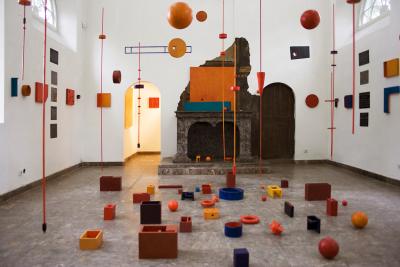
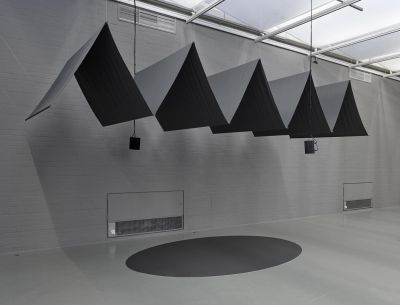
Anna Tatarczyk’s works transport the observer into a world of colour, light, and form that at first sight look like a clear geometric structure. However, a closer look reveals the multi-layered dimensions of her art: she cleverly plays with light and shadow and navigates between two- and three-dimensional space.
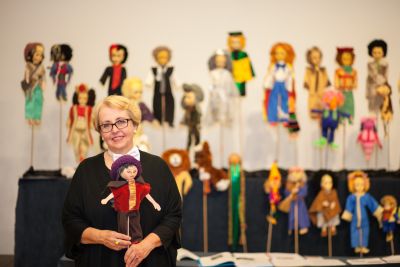
With her “Offene Augen” (“Open Eyes”) puppet theatre in Bielefeld, Maria Końska-Chmielecki (1954–2022) masterfully combined her passion for art with her career as a psychologist.
One of the few remaining religious artefacts bearing witness to the many Poles who settled in the Ruhr region during the early 20th century is a stained-glass window image of Stanislaus Kostas in Recklinghausen-Suderwich.
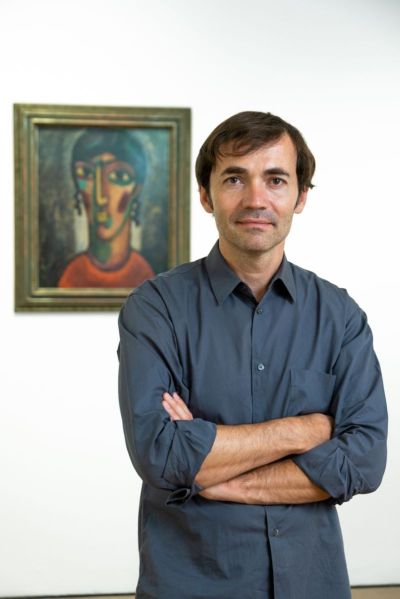
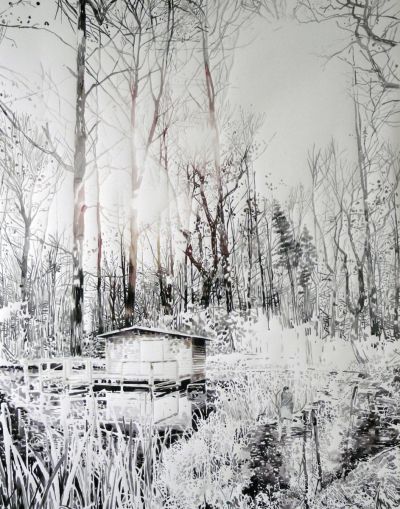
The artist Angelika J. Trojnarski (born in Mrągowo, Poland, in 1979) often takes up conflicting elements in her work, contradictions that cannot be easily resolved.
After escaping from a conservative Jewish background in the Polish town of Będzin, she led an eventful life shaped by her pursuit of freedom as well as her loyalty to her love and her traditions.
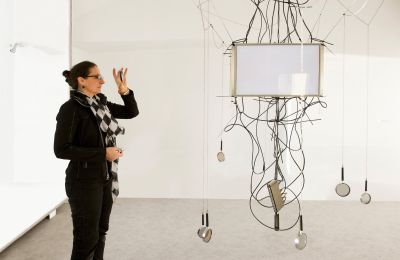
Janina Musiałczyk was born in Kraśnik, in Poland. Since 1981, her drawings, imagery, and paintings have focused on the themes of flight and human relations.
During the 1960s, she was the undisputed queen of beat music in Poland, and a hugely popular idol among Polish young people. At the end of the 1970s, Stanek continued her musical journey under the name “Cory Gun” West Germany.
The “PoKuSa” gallery for contemporary Polish art opened its doors in Albrechtstrasse 40 in Wiesbaden in 2001 and is one of the oldest prestigious galleries in the city.
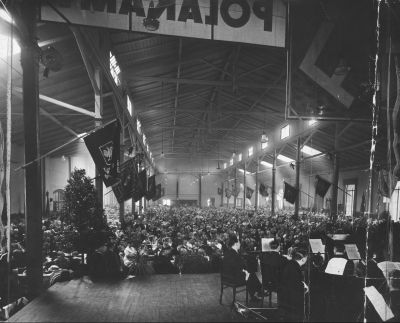
The 100th Anniversary of the founding of the Union of Poles in Germany is a good opportunity to remind ourselves of its origins, its work and its current activities.