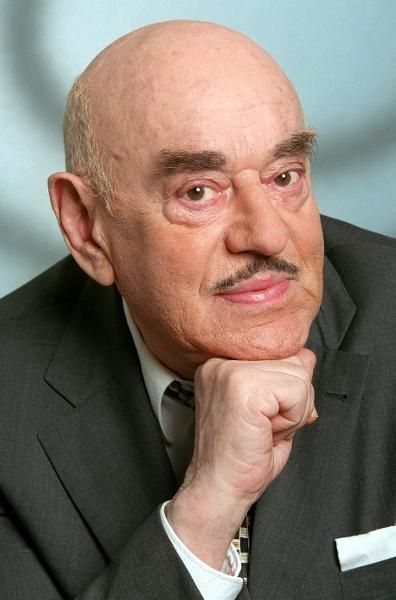


































Anatol Gotfryd

Mediathek Sorted


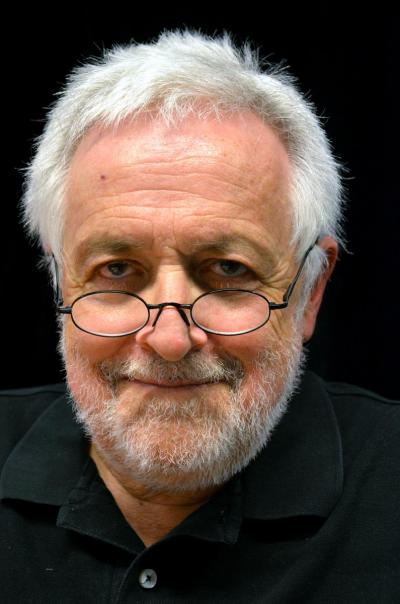
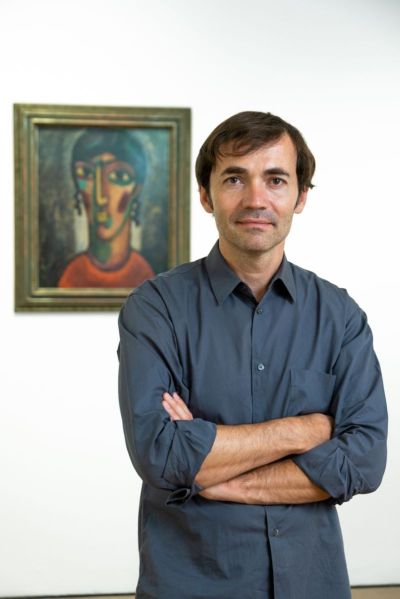
In the studio at RBB „COSMO Radio po polsku“, 5.02.2018.

Jürgen Tomm and Anatol Gotfryd, Reading in the Berlin Buchhändlerkeller on 4 March 2018. (Extract)

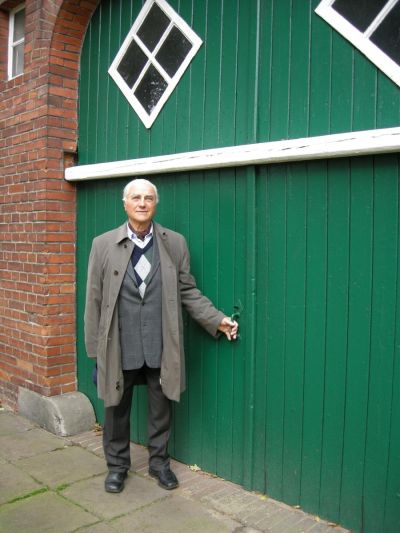
Anatol Gotfryd was born on 3 October 1930 in Jabłonów, a small town in the south-eastern part of the former eastern provinces of Poland, the “Kresy” (now the Ukraine). At the time of the second Polish Republic, this region was a melting pot of Poles, Jews, Ukrainians, Germans and Hungarians. As he stated in an interview for the “COSMO Radio po polsku” programme in 2018, this multicultural society in the remote Polish Galicia shaped him.[1]
He grew up in a well-to-do Jewish family. His grandparents on his mother’s side moved to Galicia from the outskirts of Vienna. When he was barely two years old, his father died from miliary tuberculosis that he had caught from one of his patients. The young Anatol, nicknamed Tolek, spent his formative childhood years with his loving grandparents. And even though they spoke Polish at home, the family still maintained Jewish traditions. The children were given a solid education and were equipped with language skills that gave them the opportunity to go out into the world.
In 1938, Tolek moved to the neighbouring town of Kołomyja where his mother, who had just remarried, was living. At the time, Kołomyja was a lively, vibrant district town, half of whose inhabitants were Jews. One year later, this supposedly safe Gallic idyll was ruined by the invasion of the Red Army and brought to an end two years later by the German occupation. 18,000 Jews in Kołomyja, including Anatol Gotfryd’s family members, were locked away behind ghetto walls.
In autumn 1942, the Germans deported the Jews from Kołomyja to the Bełżec concentration camp where around 450,000 people were murdered. Tolek, who was 12 years old at the time, was in one of the cattle wagons in which they were transported in absolutely inhuman conditions. Many people died from the heat, dehydration and hunger in the overfilled wagons. “This is the day that I cried for the first time. Because I was one of the last to get into the wagon, I was very lucky”, remembers Anatol Gotfryd in his autobiographical novel, “Der Himmel in den Pfützen”.[2] It is only because the young boy chanced upon a place in the wagon near a door that was letting in air that he was able to breathe properly. When one of the train passengers destroyed an air grille, Tolek and his mother and father jumped out of the moving train. While he was on the run, he was stopped by a Ukrainian law enforcer. And luck was on his side once again: The policeman let him go.
After escaping transportation to Belzec, Tolek and his parents managed to get to Lwów. In Lwów, he was given a new identity and masqueraded as a Catholic boy called Roman Czerwiński until the end of the war. This he was able to do because he looked Aryan and spoke Polish. He only survived the period of German occupation and the Warsaw Uprising thanks to the care he received from Poles, Ukrainians and Germans.
60 years later, in honour of his rescuers, he wrote the autobiographical novel “Der Himmel in den Pfützen. Ein Leben zwischen Galizien und dem Kurfürstendamm”, which was published in Germany by wjs in 2005. The Polish translation penned by Katarzyna Weintraub was published six years later by Czarna Owca under the title of “Niebo w kałużach”.
[1] COSMO Radio po polsku, 2018, https://www1.wdr.de/radio/cosmo/programm/sendungen/radio-po-polsku/ludzie/anatol-gotfryd-100.html
[2] Anatol Gotfryd, Der Himmel in den Pfützen. Ein Leben zwischen Galizien und dem Kurfürstendamm, wjs-Verlag, Berlin 2005, p. 90. [English: “Heaven in the puddles. A life between Galicia and the Kurfürstendamm”]