#
Menu toggle
Navigation

Stefan Arczyński. A master of photography spanning two cultures

Wrocław, 1983

Mediathek Sorted

Media library
  • Świdnicka Street in Wrocław - 1953
  • The Great Armory and Straw Tower at the Coal Market - With war ruins in the background, Gdańsk, 1953
  • Fragments of rubble in front of the west tower of Wroclaw Cathedral - 1953
  • Market Square in Wrocław - Photograph: Stefan Arczyński, 1954
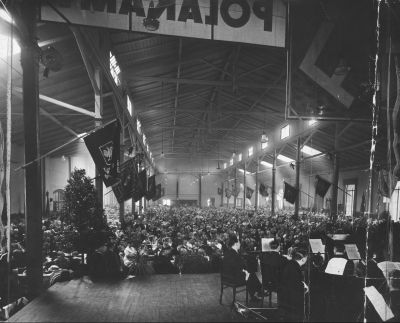
  • Choir concert - Annaberg, 1954
  • St. Matthew's Church in Wrocław - 1954
  • Wrocław Cathedral - 1955
  • Excavator in a construction site in front of the city hall of Wrocław - Wrocław, 1955
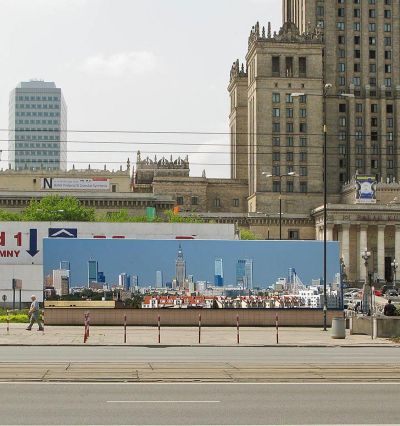
  • Józef Stalin Palace of Culture and Science in Warsaw, 1955. - Since 1956: Palace of Culture and Science (Pałac Kultury i Nauki, PKiN)
  • Destroyed area in the old city centre of Wrocław - Undated (after 1945)
  • City hall at the Market Square in Wrocław - With war ruins, 1955
  • War ruins on the Oławska-Street - Wrocław, 1955
  • The area of Świdnicka-Street and Marszałka Józefa Piłsudskiego-Street - Wrocław, 1955
  • Girl with geese in Zduny, 1956 - With a windmill in the background
  • The Marketplace Nowy Targ in Wrocław - 1957
  • Street view of Wroclaw, 1958 - With town houses in the former Krullstraße
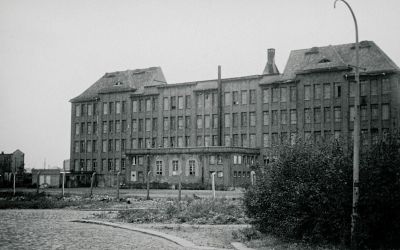
  • Former St. Anna Hospital - Wrocław, 1958
  • Ruins of the Church of St. Catherine in Wrocław - View from the west, 1958.
  • Row of houses with war damage on Białoskórnicza Street in Wrocław, 1958 - In the background - tower of St. Elisabeth Church
  • Square Tadeusz Kościuszko in Wrocław, 1953 - Reconstruction; below - Horse trolleys for debris removal
  • Wrocław Cathedral Bridge, 1961 - In the background - Wrocław Cathedral
  • The ‘Jaś’ tenement house on Wrocław Market Square - 1961
  • Former Altarists' and now tenant houses ‘Jaś and Małgosia’ [Hansel and Gretel] - Wrocław Market Square, 1961
  • Square Nowy Targ in Wrocław - With war ruins, 1961
  • Scaffolder at the Turów lignite-fired power station - Turoszów, 1962
  • Scaffolder at the Turów lignite-fired power station - Turoszów, 1962
  • Wawel Kraków, 1963 - View from the Vistula bank
  • View of Kraków, 1963 - View from the tower of Wawel Cathedral; on the right side - St. Peter and Paul's Church, in front of it St. Andrew's Church; in the background on the left - Dominican Church
  • Field workers during the potato harvest - At Piwniczna, 1963
  • Women working in the field during potato harvesting - Near Piwniczna, 1963
  • Archpriest Church of the Assumption of the Blessed Virgin Mary - Krakow, Main Market Square, 1963
  • Residential and commercial building - On Piłsudski Street in Wrocław, 1965
  • The Barasch Brothers' Department Store at the market square in Wrocław, 1966 - Location: south side, Rynek 31-32
  • Wrocław Exhibition Grounds, 1966 - View from the Centennial Hall; left - ‘glica’ stele (built in 1948); right - Four Domes Pavilion
  • Wrocław Gate in Oleśnice - 1966
  • Highway near Wrocław - 1967
  • High-rise buildings of a housing estate in Gajowice - Wrocław, 1967
  • Wroclaw City Hall, undated (after 1953) - View from southeast
  • The Oder at the Grunwald Bridge - In Wrocław, undated (after 1945)
  • Square Solny in Wrocław - Right - high-rise building of the Sparkasse, undated (after 1945)
  • Inner courtyard of the old city prison in Wrocław, 1981 - Ul. Więzienna; function: Wrocław branch of the Institute of Archaeology and Ethnology of the Polish Academy of Sciences
  • Wrocław Market Square with the City Hall - Undated (after 1945)
  • North side of the Wrocław Market Square - Undated (after 1945)
  • University of Wrocław - View over the Oder River, undated (after 1945)
  • Świdnicka-Street in Wrocław - Undated (after 1945)
  • Housing estate - Wrocław, 1969
  • Ossolineum Wrocław, 1969 - View across the Oder
  • Exhibition room in the Museum of Architecture - Wrocław, 1969
  • The Oder at the seat building of the Lower-Silesia Voivodship authorities in Wrocław, 1970 - Left - former Old Government today Lower-Silesia Voivodship authorities; middle - Peace Bridge / Most Pokoju; in the background right - Cathedral Island
  • The Pagoda of the Japanese Garden - In the Szczytnicki Park in Wroclaw, 1971
  • Fencer Fountain of Wrocław - 1972
  • Square Nowy Targ in Wrocław - 1972
  • The Wrocław Market Hall at the Plac Nankiera - 1972
  • The Philharmonie in Wrocław - 1972
  • City view Wrocław, 1972 - View from Wrocław Cathedral to the east
  • Wrocław University - View from the Oder River, 1972
  • Kameleon Department Store in Wrocław, 1972 - Former department store of Rudolf Petersdorff, built between 1927-1928
  • Cathedral Island Wrocław with St. Martin Church and Collegiate Church of the Holy Cross and St. Bartholomew - View from northwest, 1972
  • City view Wrocław, 1973 - Picture content: centre - District Office (Prokuratura Rejonowa); in the background - Elizabeth Church; perspective: view probably from the roof of the Hotel Samotnych, Grabiszyńska 9
  • Altarists' houses ‘Hansel and Gretel’ on the Ring Road in Wrocław, 1973 - North-western corner; in the background - St. Elizabeth Church
  • St. Adalbert Church - View from the southwestern, 1973
  • Facade of the Lower Silesian Medical Center DOLMED - 1977
  • Inner courtyard of the old city prison in Wrocław, 1981 - Ul. Więzienna; current function: Wrocław branch of the Institute of Archaeology and Ethnology of the Polish Academy of Sciences
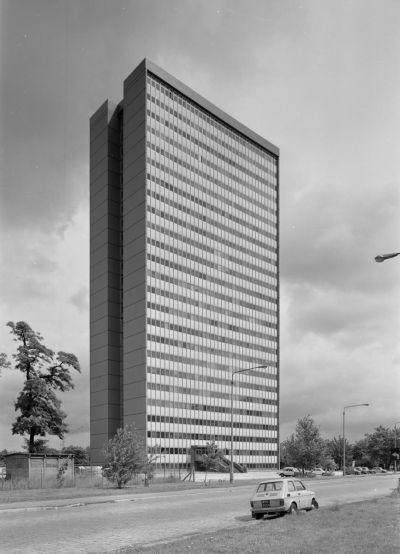
  • High-rise building in Wroclaw, 1983 - Former Polish-Soviet friendship settlement Przyjaźni, today settlement Przyjaźni
  • Tenement houses ‘Jaś i Małgosia’, Wrocław 1983 - At the north-western corner of the Wrocław Market Square
  • The Ursuline convent - Wrocław, 1985
  • High-rise building at Plac Grunwaldzki - Wrocław, 1986
  • Workers in front of a coke oven battery of the Victoria coal mine - Hermsdorf, 1986
  • A worker in front of a coke oven battery of the Victoria coal mine - Hermsdorf, 1986
  • Archbishop's Palace - Wrocław, 1986
  • St. Martin's Church and Collegiate Church of the Holy Cross and St. Bartholomew - Wrocław, 1986
  • Gravestones in the Old Jewish Cemetery - Wrocław, 1986
  • Skyscrapers at Plac Grunwaldzki - In Wrocław, 1987.
  • Street view Katowice - With old and new buildings, 1987
  • Oriel window at Wroclaw City Hall - 1987
  • High-rise building of the Sparkasse - On the Market Square in Wrocław, 1988
  • Scaffolded tower of the St. Elizabeth's Church in Wrocław, 1988 - In the foreground - gables of the burgher houses Rynek 2 and 3
  • Hotel ‘Panorama’ in Grabiszyn - Wrocław, 1989
  • The ‘Orbis’ Hotel in Wrocław - 1989
  • City view Wrocław, 1987 - Content: in the background - an exhibition building ‘Panorama Racławicka’
  • Snowy road near Wrocław - Undated (after 1945)
  • Stefan Arczyński (right) with a friend in Moscow, 1956 - Photographer unknown
Wrocław, 1983
Wrocław, 1983

His time in Germany
 

Stefan Arczyński was born in Essen on 31 July 1916 as the third child of Wiktor Arczyński (1879–1940) and Helena (1889–1918), née Adamska. The family hailed from what was at the time the German province of Poznań and shared the same fate as thousands of Poles who, around the turn of the 20th century, emigrated from the rural part of the region annexed by Prussia to the industrial areas of West Germany, to the Rhineland and to Westphalia to look for work. 

Stefan’s father was originally from Solec Kujawski. Around 1900, he found a job in the  administration department of the Krupp steelworks in Essen. His mother came from Mogilno in Greater Poland. In a photo taken in Gniezno in 1907, we can see a young woman in a fashionable white dress with a boa around her shoulders. Her pretty, round face is animated by a slight smile. Wiktor and Helena are married in 1908. Their children Tadeusz and Helena are born shortly afterwards. The Arczyńskis held firm to their Polish heritage, Polish traditions and Polish language and kept in touch with their family that had remained in the East. Wiktor was involved in various Polish organisations and after the First World War was also active in the Union of Poles in Germany

Following the premature death of the mother, who passed away only two years after the birth of her youngest son Stefan, the father was left to bring up the children. A photo from this time, taken in Essen in 1919, shows him with his children. The family is in festive dress and gathered around a small round table. The father in a dark suit has his arm around the small, long-haired Stefan whose two older siblings are standing on the other side of the little table. They all seem relaxed as they look into the lens, the children are smiling a little. To maintain their ties with their home country, the father regularly sends the young Arczyńskis to their family in Poland during the holidays. Stefan’s brother did his A-levels in Poland although he went through the school system in Germany. He then studied at the Politechnika Gdańska (Gdansk Technical University), took on Polish citizenship and moved to Upper Silesia to work as a chemist.

Stefan Arczyński discovers his love for photography in his youth. His first photographs were taken in the 1930s and he was predominantly interested in urban architecture and sport. When he attended sporting competitions and games, his camera was always with him. In 1934, after finishing secondary school, he trained in a photographic studio in his home town of Essen, where, over the next three years, he learnt the basics of the trade. During this time, he worked as a wedding photographer taking portraits and group pictures. But because he wasn’t interested in using his camera to just capture the life stages of middle-class families, he worked on refining his own style. 

At this time, photography in Germany was already very popular and as such was also well developed, although the influence of modern art movements in 1933 had been significantly restricted. However, the young Arczyński was certainly influenced by role models, such as Erich Salomon, Karl Blossfeld and August Sander. But the young man was trying to find his own language in photography by combining the aesthetic of the “new reality” (influenced by Bauhaus, by the Deutscher Werkbund (German Association of Craftsmen) and others) with a certain amount of admiration for the gigantism of many themes. 

He was soon able to put his abilities to good use when he photographed the eleventh summer Olympic Games in Berlin in August 1936. One of these pictures shows Helen Stephens, who, at that time, was the fastest runner in the world. From this moment on, portraits become a favourite means of expression for him.